American Airlines runs two very different lounge experiences in the United States. Admirals Clubs are the familiar living rooms of the network, scattered widely and built to help you reset between flights. Flagship Lounges sit at a higher tier, with larger spaces, better food and drink, and access rules tied to premium cabins and international itineraries. If you fly American or any oneworld partner often, knowing which one you can enter, and which one you should aim for, can change the feel of your travel day.
What each lounge is, in plain terms
Admirals Clubs anchor the American Airlines Lounge network. Think reliable seating, complimentary Wi‑Fi and workspaces, a light buffet with snacks and small plates, and a staffed bar where house beer, wine, and well spirits are included, with premium bar service available for purchase. These clubs are everywhere American has a footprint: Dallas/Fort Worth International Airport, Charlotte Douglas, Chicago O’Hare, Miami, Phoenix, Philadelphia, Los Angeles, and New York–JFK are the busiest, but the network also reaches smaller stations where a Flagship Lounge would not make sense. In practical terms, Admirals Clubs help you find a quiet chair near a power outlet, grab a bite, and take a phone call without shouting over the gate area.
Flagship Lounges lift most of those basics into a different league. Food resembles what you would expect from a quality business class lounge: chef‑driven hot and cold dishes that rotate through the day, a self‑serve premium bar with better wines and spirits, real espresso, and full shower suites that do not feel like an afterthought. Seating is roomier, and the staff‑to‑guest ratio tends to be higher. At major hubs like JFK, DFW, MIA, and sometimes LAX or ORD depending on construction cycles, Flagship Lounges feel like an oasis during the morning transatlantic arrival rush or the evening long‑haul departures. Access is stricter than the Admirals Club, which keeps them calmer during peak banks.
There is also Flagship First Dining, a separate, invitation‑only restaurant within select Flagship Lounges. That space is reserved for the rare true three‑cabin Flagship First ticket on eligible international routes or on the A321T transcontinental First Class between JFK and the West Coast, along with occasional invitations for ConciergeKey members. It is a plated, sit‑down meal with a curated wine list and proper service. If you qualify, it is one of the best preflight dining experiences offered by a U.S. Carrier.
Access rules, decoded without the fine print headache
Airport lounge access is usually less about who you are and more about what ticket you are holding that day, except in the United States where memberships and credit cards add a second path. Admiral Clubs lean into the U.S. Model. Flagship Lounges lean into the oneworld Alliance model.
Admirals Club access typically comes from one of three angles. A paid Admirals Club membership lets you in regardless of cabin on most same‑day American or oneworld flights. The Citi AAdvantage Executive World Elite Mastercard effectively bakes in an Admirals Club membership for the primary cardholder, which is why frequent domestic flyers carry it. Day passes are sold at many locations when capacity allows, useful if you want a quiet hour before a tight connection. Status alone inside AAdvantage, even AAdvantage Executive Platinum or ConciergeKey, does not grant Admirals Club access on purely domestic itineraries unless you also hold the membership or eligible card. Priority Pass does not open Admirals Club doors, which catches some travelers off guard.
Flagship Lounges tie access to either premium cabins or to alliance status on qualifying flights. A same‑day international itinerary in Flagship Business or Flagship First gets you in. Certain transcontinental flights regarded as premium, like JFK to LAX or JFK to SFO, also qualify when you are booked in Business Class or First Class on the A321T. Oneworld Emerald or oneworld Sapphire members traveling on an eligible international flight can enter regardless of cabin, consistent with alliance standards. A traveler with British Airways Gold or Qantas Platinum, for example, often uses Flagship before a U.S. Domestic connection that sits within a larger international ticket. American’s own AAdvantage Executive Platinum members do not get domestic‑only Flagship access on status alone, which is a quirk that matters if you are connecting through a hub on two domestic legs.
Guest access policy rules diverge as well. Admirals Club members generally can bring immediate family or up to two guests, and the Citi Executive card follows a similar pattern. Day pass holders usually cannot bring a free guest. Flagship Lounges usually allow one guest for oneworld Emerald and Sapphire members, provided the guest is traveling on the same eligible international itinerary. Flagship First Dining has the tightest policy, often no guests unless specified on your invite or unless you are in Flagship First on an eligible long‑haul, when one guest may be permitted. Policies have small wrinkles by station and season, so I check the app before banking on guesting in a colleague.
Where you will find them, and how they feel at peak times
If you live or connect through Dallas/Fort Worth, you learn the rhythm quickly. Admirals Clubs sit in multiple terminals, which spreads crowds and makes it easy to duck in for 20 minutes near your departure gate. The Flagship Lounge at DFW, on the other hand, sees a predictable wave just before the evening departures to Europe and South America. Showers book up in that window, then free up as the long‑hauls push back. I plan a 30‑minute buffer if I want a shower around 5 to 7 pm.
Miami behaves similarly, though the mix of Caribbean, Latin America, and European traffic creates two crescendos. An Admirals Club in Concourse D can feel busy at 7 am when everyone is changing flights from the Northeast. The Flagship Lounge gets a mid‑morning arrival swell, then an evening departure peak to places like LHR, GRU, and EZE. If you need quiet to work, the Flagship is worth the access hoops. If you just need coffee and Wi‑Fi before a hop to Tampa, the Admirals Club near your gate is the time saver.
At JFK, the T8 lounge landscape changed with the British Airways move. American and BA now co‑locate spaces, and the Flagship Lounge there benefits from shared premium volumes. It is also where you see the most cross‑pollination with oneworld partners. You may find yourself sitting near someone headed to a Cathay Pacific Lounge in Hong Kong the following week, or someone comparing British Airways Galleries Lounge catering. JFK is also where you are likely to notice premium airport amenities that are not strictly airline run, including the Chelsea Piers Fitness studio in the terminal complex that travelers sometimes use before or after a lounge visit. If you are connecting on a long day, a 20‑minute stretch can be better than a second espresso.
Chicago O’Hare and Los Angeles International each show the split personality of the network. Admirals Clubs cover more gates and offer wide‑open hours. Flagship kicks in for the long‑hauls and the A321T transcontinental business. In Phoenix and Philadelphia, Admirals Clubs carry most of the weight, with Flagship service appearing when long‑haul schedules justify it. Charlotte is an Admirals Club town for now, with broad coverage and strong Wi‑Fi at most clubs, which matters when those afternoon thunderstorms roll in. London Heathrow is where the partner‑lounge layer becomes practical. If your American ticket lands you at LHR T3 or T5, you might choose a British Airways Galleries Lounge or a Qantas Lounge depending on crowding and your oneworld status, then compare it mentally to what you get at a Flagship in the States.
Food, drink, and how much that actually matters
In an Admirals Club, you will get breakfast standards in the morning, a build‑your‑own snack or salad bar through midday, soups or small hot items later, and a selection of cookies and chips that keep kids American Airlines Lounge happy on a delay. House beer and wine are included, with a menu of paid upgrades at most bars. When flights go off schedule, staff keep trays filled. It is not a destination meal, but it is consistent.
Flagship Lounges generally elevate the buffet into something you might choose even if you were not hungry when you arrived. In the late afternoon you will typically see a couple of composed salads, at least one protein hot dish, a vegetarian option, and sides that rise above steamed carrots. Desserts move beyond cookies, and the coffee bar is a proper espresso machine, not push‑button. The bar is self‑serve at many stations with better labels. After a day of meetings, being able to plate a small, well‑seasoned dinner in a quiet room is the exact reason frequent flyers aim for Flagship when they can.
Flagship First Dining changes the script entirely. If you have a late departure to Europe and a Flagship First ticket, you can sit down for a multi‑course meal with wine pairings and leave the flight to be a place to sleep. The menus rotate locally. At Miami, the seafood dishes have been the highlight more than once. At JFK, the beef course tends to be the safe bet. Portions are right for a preflight plan. If you are a light eater, you can ask for a half portion and no one blinks.
Showers, quiet, and the work factor
Both lounge types offer complimentary Wi‑Fi and workspaces, but the quality of the work environment depends on layout and crowding. Admirals Clubs have improved their power outlet density and often include small phone rooms. In the clubs with an interior core, the hum of conversation can sit at a level that makes video calls a bit awkward without a headset. Flagship Lounges usually carve out quieter nooks with fewer passersby, which suits longer calls or heads‑down work.
Shower suites exist in many Admirals Clubs at hubs like DFW, MIA, LAX, and JFK, but availability is more limited and sometimes restricted to certain clubs in a terminal. Flagship shower suites are larger, more numerous, and easier to reserve on arrival during off‑peak periods. If you are arriving from London at 10 am and heading straight to a meeting, plan on Flagship for the shower. If you are connecting through Phoenix with a two‑hour layover, an Admirals Club helps you freshen up, but do not expect spa‑level amenities.
Status, tickets, and real‑life scenarios that decide the answer
The people who get the most from an Admirals Club are the ones who fly American often on domestic routes and want reliability. If your weekly life is BOS to DCA, then DCA to CLT, then home through PHL, paying for an Admirals Club membership or holding the Citi AAdvantage Executive card is common sense. The membership cost tends to land in the high‑hundreds of dollars per year, sometimes more than $1,000 depending on the tier and whether you add household access. The card’s annual fee is steep, but it covers the membership and the guest access is generous. When your calendar is packed, being able to drop into the club closest to your gate is the utility you feel over and over.
The people who get the most from Flagship Lounges are those who either buy or upgrade into premium cabins on long‑haul or who hold oneworld Emerald or Sapphire with an international itinerary. If you plan one or two big trips a year in Flagship Business, structure your airport time to make the most of Flagship’s food and showers. On the JFK to LAX transcontinental in Business Class, I like to eat a real dinner in the lounge and sleep after takeoff. On a Miami to Buenos Aires overnight, I do the same. If you hold Executive Platinum within AAdvantage, remember that your oneworld Emerald benefits unlock Flagship on eligible international days, but not on a domestic‑only sprint from Phoenix to Dallas. That subtlety trips up smart travelers who live inside American’s system and expect status to unlock everything.
Guesting makes a difference for families and colleagues. With an Admirals Club membership, you can usually bring two guests, or your spouse and children, which turns a delay into a manageable evening. Flagship lets you bring one guest on qualifying international itineraries if you are oneworld Emerald or Sapphire. If you travel with a partner often, it is the difference between dinner together or in two different rooms.
Partner lounges and when to deviate from the default
American plays inside the oneworld Alliance, which becomes real the moment your itinerary crosses borders. At London Heathrow, you may choose among a British Airways Galleries Lounge, a Qantas Lounge, or Cathay Pacific’s space, all of which accept oneworld Emerald and Sapphire with a same‑day departure. If you are a heavy coffee person, the Qantas Lounge can be the right call in the morning. If you want a shower and a quiet corner in the afternoon, Cathay’s design usually helps. If your ticket is on American but your status is with a different oneworld airline, your card still does the work across these lounges as long as your flight is eligible. On the lounge guest policy rules U.S. Side, if a Flagship Lounge is closed for renovation, an Admirals Club may honor access for Flagship‑eligible guests, or you might be directed to a partner lounge. I have seen this at ORD and LAX during construction periods.
Priority Pass is a separate ecosystem and mostly irrelevant for Admirals Clubs and Flagship Lounges. If you rely on Priority Pass for access at a smaller field, it may send you to an independent lounge, a cafe credit, or a different terminal, but it will not open an Admirals Club door. When you compare cards, do not conflate those networks.
The competitor check: how United Club fits into the picture
Travelers who split time between carriers often ask how Admirals Club compares with United Club. They fill similar roles, and both are membership‑driven. United Polaris Lounges align more closely with Flagship in concept, with access tied to international premium cabins and top alliance status. If your home airport rides heavy on United, your muscle memory will carry over on American. You will notice small differences in buffet quality and bar standards by station, but the pattern holds: membership lounges for everyday domestic travel, premium lounges for international and select transcontinental departures.
Money, cards, and whether the math works
Lounge membership cost is real money, so treat it like a tool you expect to use weekly. For many business travelers, the Citi AAdvantage Executive World Elite Mastercard is the cheapest path to frequent lounge time because the included Admirals Club membership would cost roughly the same or more if purchased outright. If your employer reimburses memberships but not card fees, run both numbers across a year. If you travel as a couple, note the guest access rules and the ability to add authorized users, which can be a better deal than buying two memberships.
For Flagship access, the calculus tracks your premium cabin buying or upgrading patterns. If you upgrade to Flagship Business a couple times a year using miles or systemwide upgrades as an AAdvantage Executive Platinum, you are already most of the way there. If you rarely sit up front on long‑haul, do not build your expectations around Flagship. Use an Admirals Club near your gate for the basics, and treat Flagship as a perk when your itinerary and status line up. Priority boarding privileges, better seats, and the extra service on board often matter more day to day than lounge type if you do not arrive early.
Two quick decision guides
- If your weekly travel is 75 percent domestic and you value consistency near your gate, Admirals Club membership or the Citi AAdvantage Executive card pays for itself in stress reduction. If your trips cluster around international departures or JFK transcontinental flights in premium cabins, plan to use Flagship on those days and save your early arrival time for the lounge with better food and showers. If guest access is critical because you travel with a partner or team, read the guest access policy for your specific access method, since Admirals Club membership is more generous than day passes, and Flagship guesting is typically capped at one. If you hold oneworld Emerald through a foreign program and often connect in the U.S., expect more doors to open at Flagship than if your status is U.S. Based without an international segment. If you need gym access or a stretch on a long day at JFK, remember the Chelsea Piers Fitness presence in the T8 complex, then pair it with whichever lounge your ticket allows.
Edge cases that trip people up
Transcontinental definitions are narrower than most travelers assume. On American, the true premium transcontinental routes for lounge access are typically the A321T flights between JFK and LAX or SFO. A business class ticket from MIA to LAX does not always confer Flagship access unless marketed and operated as an eligible premium service. I have seen agents turn away well‑dressed, paid‑first passengers who were not on a qualifying route. Do not take it personally. It is about the definition in the system that day.
International itinerary means the whole ticket counts, not just the next hop. If you fly Tulsa to DFW to London on one ticket in economy with oneworld Sapphire, Flagship at DFW should welcome you before the long leg. If you booked two separate tickets, the DFW agent may not be able to see your long‑haul segment and will treat you like a domestic traveler. If you live in the world of separate tickets, carry documentation and allow time for a supervisor to connect the dots.
Children and guesting generate hallway debates. Admirals Club agents are used to families and apply the policy consistently. Flagship agents will hold the line if a third guest tries to slide in on an international bank at peak time. If your kids are older teens and you have three of them, split your time or pick Admirals for that connection.
Construction cycles are real. American has been on a multi‑year refresh of its lounge network. At any given moment, one station will be closed for renovation, replaced by a temporary space, or running with reduced seating. JFK’s reshuffle with British Airways created a better experience in the long run, but during the build it meant detours and longer walks. When your schedule is tight, the closest Admirals Club can beat a better Flagship across the terminal.
So which one is best for you?
If you are a frequent domestic traveler who values predictability, Admirals Club is your workhorse. It is available in more places, it ties neatly into AAdvantage through membership and the Citi AAdvantage Executive World Elite Mastercard, and it solves the real problems of crowded gates, dead outlets, and hunger at odd hours. The complimentary snacks and beverages are good enough, the Wi‑Fi is stable, and the staff get you rebooked faster than a phone queue when weather hits Charlotte.
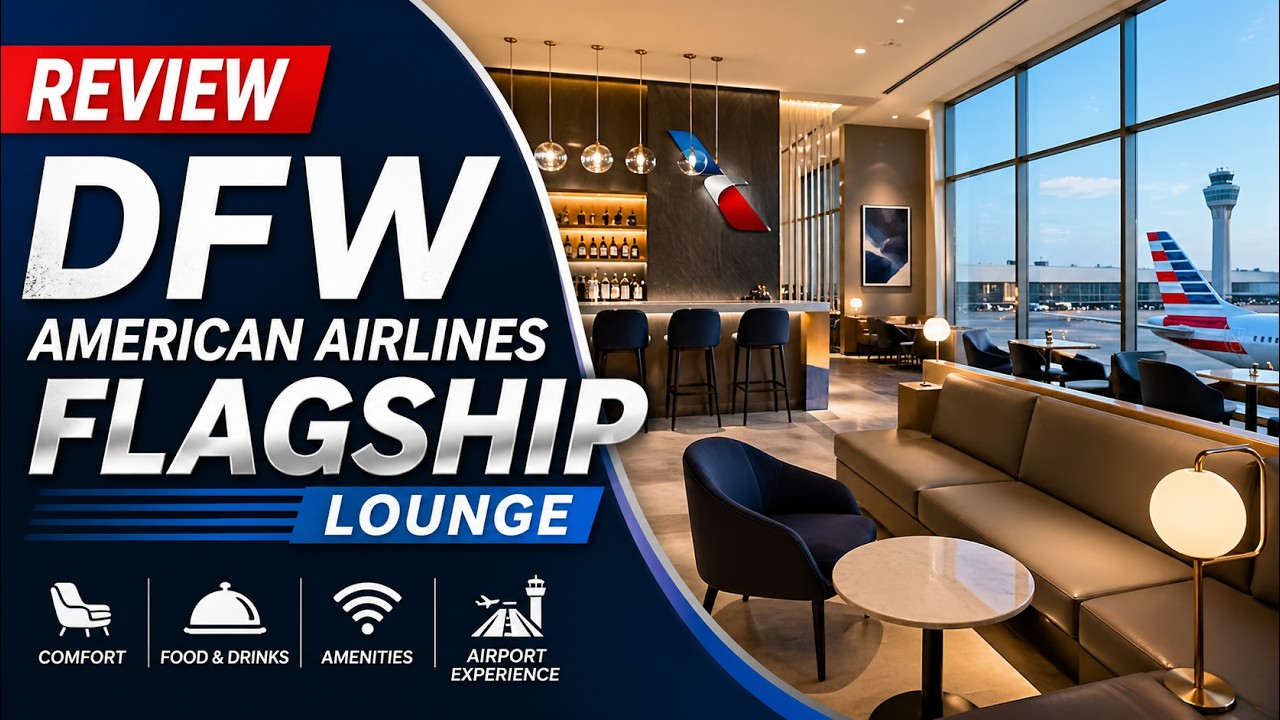
If your travel skews toward premium cabin flying on international or transcontinental routes, Flagship Lounge is the better target on those days. The food and drink are strong enough to replace a meal, the shower suites let you reset, and the space runs quieter even at peak times. If you are lucky enough to hold a Flagship First ticket on an eligible flight, Flagship First Dining is a reason to arrive early.
If you are building a plan around oneworld Alliance benefits, pair your oneworld Emerald or oneworld Sapphire status with the right itinerary and enjoy the flexibility. Use Admirals Clubs for domestic hops and partner lounges like a British Airways Galleries Lounge, Qantas Club, or Cathay Pacific Lounge when you are abroad. Keep an eye on guest access policy details, and remember that United Club comparisons are useful for expectations, but not for access.
Most travelers land in a hybrid approach. Hold an Admirals Club membership or the Citi Executive card to smooth the rough edges of domestic flying. When your ticket upgrades to Flagship Business, budget time to enjoy the better lounge. On rare Flagship First Dining days, treat it like the special occasion it is. That mix reflects how American actually runs its operation across DFW, CLT, ORD, MIA, JFK, LAX, PHL, PHX, and beyond, and it is the way to turn airport time into something you control rather than something that happens to you.